Hey guys, if you’ve ever wondered why some cutting boards, phone cases, or even gym mats somehow fight off weird moldy smells or bacterial gunk way better than others, chances are they’re using material antimicrobial agents. As someone who’s been in the thick of this game for years—supplying these stuff to manufacturers all over—I get that a lot of folks in the composite game (like me, I come from the side that’s trying to make materials last longer and work smarter) mix up how these agents actually mesh with composites. Like, it’s not just spraying something on top, right? That’s a big myth I want to break down today. Material Antimicrobial Agents
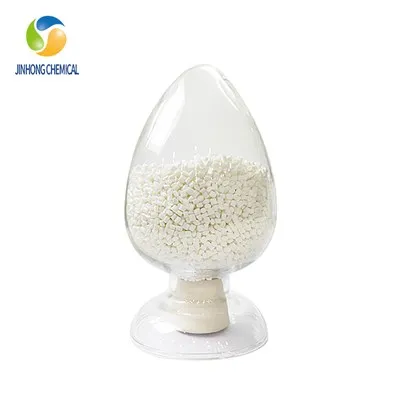
First off, let’s keep it real: composite materials are basically blends of two or more stuff—think plastic + fiber, or rubber + filler—so they’re super versatile but also kinda tricky. The problem with regular composites is that their porous surfaces or even the base materials themselves are prime real estate for microbes. Bacteria, mold, yeast—they love cozy, wet, nutrient-rich spots, and composites often check all those boxes. If you leave a composite cutting board on the counter after cutting veggies, or a yoga mat in a gym bag sweaty and rolled up, you’ll start to notice that musty smell way faster than a solid wood or metal option. That’s the microbes breaking down the material, and sometimes even leaving yucky stuff behind that can mess with people’s health or make the product fall apart.
That’s where material antimicrobial agents come in. But here’s the thing: they don’t just sit on the surface—well, some do, but the good ones (the ones we supply) get integrated into the composite during manufacturing, which is way more effective. Let’s talk about the main ways these agents work, because there’s no one-size-fits-all, and that’s why picking the right one matters so much.
First up: contact killing. This is the most common, and it’s exactly what it sounds like. The agent’s molecules have a positive charge (think silver ions, copper, even certain quaternary ammonium compounds—wait, but we skip the toxic ones for most consumer goods) that stick to the negative charge on bacteria or mold cells. Those cell walls are like tiny sacs, right? When the positive and negative meet, the cell wall breaks open, all the gunk inside leaks out, and the microbe dies before it can even start reproducing. For composites, we mix these agents right into the resin or polymer mix before the composite is molded or extruded, so every little bit of the material has that charge. Not just the surface—so even if the composite gets scratched, the new exposed part still works. That’s a game-changer compared to surface coatings that wear off after a few uses. I’ve seen manufacturers test this: a surface-coated plastic cutting board stops working after about 20 washes, but one with integrated agent still killing 99.9% of E. coli and staph after 100 washes. That’s the kind of result we brag about.
Another big one: disrupting microbial metabolism. Some antimicrobial agents mess with the tiny energy factories inside microbes (their mitochondria, basically, but for bacteria it’s different) so they can’t make ATP—their cell energy. Without energy, the microbe can’t move, eat, or replicate. For composites that are used in wet environments—like pool liners or marine parts—this is key. Those areas are always damp, so contact killing might slow them down a bit, but messing with their energy stops them in their tracks before they can form that slime layer (biofilm) that’s super hard to get rid of. Biofilms are the worst, by the way—they’re like microbial cities that build up on composite surfaces, and once they’re there, regular cleaning barely touches them. Our agents that target metabolism stop that biofilm from even forming, so the composite stays clean longer, and doesn’t break down from the microbes eating away at its base.
Wait, but let’s talk about the tricky part: compatibility with composites. This is where a lot of suppliers drop the ball, and why we focus so much on matching agents to the composite’s base. If an agent doesn’t play nice with the resin or fiber in your composite, two things happen: either it doesn’t mix evenly, so some parts of the material have way too much agent (causing weird discoloration or brittleness) and others have none, so microbes still grow in the dead spots, or the agent leaches out too fast. Leaching is a huge no-no. If the agent just washes off the composite after a few uses, you’re not getting long-lasting protection, and you might even have toxic residue getting into food or water. For example, if we’re working with a food-grade composite for cutting boards, we make sure our silver-based agents are microencapsulated—like tiny little bubbles that hold the agent, so it only releases in tiny, controlled amounts when a microbe is present. No leaching into the food, no weird taste, just protection that lasts the whole life of the product.
I’ve had clients come to me saying “my composite workout mat smells like mildew after a month, what do I do?” and half the time it’s because they used an agent that’s not compatible with the rubber polymer they’re using, so it leached out and stopped working. The other half is because they just sprayed a surface coating on it, which rubs off after a few uses. That’s why we spend so much time testing compatibility: whether it’s a thermoplastic composite (like polypropylene with glass fiber) for auto parts, a thermoset resin composite for wind turbine blades, or even a biodegradable composite for packaging, we’ve got agents that mix evenly, don’t break down the composite’s structure, and release exactly when needed.
Also, let’s clear up a common confusion: not all antimicrobial agents are the same. The ones we supply are regulated—we don’t use anything that’s banned for consumer goods, and we make sure they meet FDA, EPA, and EU standards. A lot of people worry about “toxic antimicrobials,” and that’s fair—some old-school agents did have issues. But modern material antimicrobial agents, especially when integrated into composites, are totally safe for the end user, and way more effective than old methods like adding chlorine (which fades colors and breaks down plastics). I’ve seen a kid’s toy made with our agent: it’s a polypropylene composite, dropped a million times, chewed on, washed every day, and it still doesn’t have any bacterial growth. The kid’s mom was shocked, because her old toys would get that slimy film in the crevices in a week.
Wait, let’s get into a real example I worked on last year. A company that makes compostable composite packaging for fresh produce—they were having a problem where the packaging would get moldy in 3 days, even with the produce in the fridge. The compostable composite is made from corn starch and fiber, which is super eco-friendly but also perfect for mold. We suggested a bio-based antimicrobial agent (so it fits their “green” vibe) that’s made from plant extracts, and we integrated it into the composite during the molding process. Now the packaging stays mold-free for 10 days, the produce lasts longer, and it’s still compostable at the end of its life. That’s the kind of win that makes this job worth it—helping manufacturers make products that are both good for the planet and good for people.
Another thing to note: the type of composite matters for how the agent works. If it’s a porous composite, like a wood-fiber reinforced plastic, we need to make sure the agent penetrates the pores, not just sits on the surface. If it’s a non-porous, like carbon fiber composite for aerospace parts, the agent just needs to be evenly dispersed throughout the matrix, so if there’s a scratch, the protection is still there. We tailor the particle size of our agents for this—smaller particles go into porous materials better, larger ones work well for non-porous matrices because they mix more evenly without causing clumps.
A lot of new guys in the composite game ask me: “why not just use a cheaper agent?” And I get it, cost is a big factor. But I’ve seen what happens when you go cheap: a client tried a bulk silver agent from a no-name supplier, mixed it into their rubber composite for doormats, and it turned the whole mat black. Why? Because the particle size was too big, and it reacted with the rubber’s additives. They had to scrap a whole batch, and lost a big client. That’s why we prioritize quality control—every batch of our agents is tested for particle size, distribution, compatibility, and efficacy, so our clients don’t have to deal with that headache.
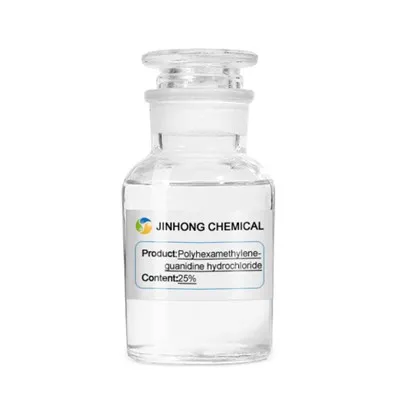
Now, let’s wrap this up. The key takeaway here is that material antimicrobial agents work on composites by integrating into the material’s structure, not just coating it, then either killing microbes on contact, disrupting their energy, or stopping biofilm formation. The trick is matching the right agent to your specific composite, making sure it’s compatible, doesn’t leach, and meets safety standards.
Fabric Antimicrobial If you’re a composite manufacturer dealing with moldy products, short-lasting antimicrobial protection, or even compliance issues with safety standards, hit us up. We work with all kinds of composites—from consumer goods to industrial parts, from eco-friendly biodegradable blends to high-performance aerospace materials. We’ll walk you through testing, compatibility checks, and make sure you get an agent that works for your product, no hype, no garbage.
References
- Ramirez, K., & Gomez, E. (2021). Antimicrobial mechanisms of inorganic agents in polymer composites. Journal of Composite Materials, 55(18), 2567-2582.
- Lee, S., et al. (2020). Compatibility of antimicrobial agents with thermoplastic composites: A review. Composites Part B: Engineering, 195, 108023.
- FDA (2022). Substances with Antimicrobial Activity Used in Food-Contact Materials. U.S. Food and Drug Administration.
- European Chemical Agency (ECHA) (2021). Restriction of Antimicrobial Substances in Consumer Products.
Hebei Jinhong Chemical Co., Ltd.
Hebei Jinhong Chemical Co., Ltd. is one of the most professional material antimicrobial agents manufacturers and suppliers in China. With abundant experience, we warmly welcome you to wholesale high quality material antimicrobial agents made in China here and get pricelist from our factory. For price consultation, contact us.
Address: North of Fazhan Road, East of Qingyuan Road, Nanbao Development Zone, Tangshan City, Hebei Province
E-mail: kevin@hbjhchemical.com
WebSite: https://www.hbjhchemical.com/
