Hey there, if you’ve ever dealt with particle board (PB) that’s gone all wonky—like a bookshelf that bows mid-moist season or a countertop that warps so bad your coffee mug slides off—you know how frustrating that is. I’m a particle board supplier, so I hear this complaint a lot from contractors, DIYers, cabinet makers, and even small furniture shop owners. The thing is, particle board’s a budget-friendly, versatile material, but it’s made from wood particles and resin—porous by nature, right? So humid environments (think basements, bathrooms, kitchens, coastal areas) are its kryptonite. But it’s not a lost cause. I’ve worked with thousands of clients over the years, tweaking our products and sharing hacks that actually prevent warping, not just band-aid it. Let’s break this down like we’re chatting over a lunch break, no stuffy jargon. Particle Board
First, let’s keep it real: most warping happens because particle board absorbs moisture like a sponge. That’s not a flaw in the material itself—it’s how it’s manufactured, and how people use it. A lot of folks skip the basic prep steps, or don’t pick the right PB grade for their space. Let’s start with the #1 rule: match your particle board grade to your humidity level. Not all PB is the same. You’ve got standard PB for dry indoor spaces (like a kids’ bedroom shelf), moisture-resistant PB for mild humidity, and marine-grade PB for high-humidity coastal or bathroom use. Wait, let’s clarify: moisture-resistant PB isn’t waterproof. It’s treated with a wax or resin binder that repels surface moisture, but it’s not invincible if it’s sitting in standing water for days. I’ve seen clients buy standard PB for a bathroom vanity and wonder why it warped—duh, that’s a space with constant steam and splashes. If your job’s in a place where humidity hovers over 60% most days, splurge on that moisture-treated or marine option. It costs a little more, but trust me, it’s way cheaper than replacing a warped cabinet down the line.
Next, even if you get the right grade, installation matters. I can’t tell you how many times a client used PB straight from the package, no edge sealing, and then complained about warping. Particle board’s edges are super porous—those are the easiest spots for moisture to sneak in. Imagine a piece of PB as a cube: the top, bottom, and sides are sealed when it’s made, but the sawed edges? Total openings. So sealing those edges is non-negotiable. I recommend using a 100% silicone caulk, epoxy resin, or a specialized edge sealer (we even have a few affordable ones we send out with bulk orders if you ask). Don’t use regular wood glue— that doesn’t create a waterproof barrier. When sealing, make sure you cover every inch of the sawn edge, and let it cure fully before installing. If you’re making a piece of furniture with multiple PB panels (like a desk with a drawer base), seal all cut edges, not just the main panel. Even a tiny unsealed edge can let moisture in over time.
Then there’s protecting the surface. Even if edges are sealed, moisture can seep into the top or bottom of the panel if it’s left exposed. Wait, no—wait, when PB is manufactured, the faces are sealed with melamine or resin, right? But if you’re cutting it or covering it with something like laminate, you have to make sure that laminate is applied without gaps. A lot of DIYers use contact cement for laminates, and they miss a spot, leaving a tiny gap where humidity gets in. Or, for things like bathroom countertops, use a high-quality laminate that’s heat and moisture-resistant, not the cheap stuff from the hardware store. Another quick tip: if you’re installing a PB shelf in a damp area, line it with a waterproof liner—like the stuff used in RVs, or even heavy-duty plastic sheeting. Just make sure you cut it to fit exactly, no gaps at the edges. I had a client in Florida do this for his garage cabinets, and he said they’ve stayed flat for 3 years, no issues.
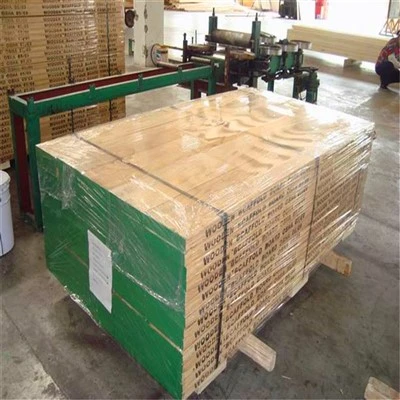
Now, storage is a big one most people overlook. I’ve had a client get a big shipment of PB, stack it in his basement unfinished, and a week later half of it warped. Why? Basements are humid, and stacking it directly on concrete (which is always damp) draws moisture up through the bottom panels. If you’re storing PB before use, keep it off the ground—use pallets, not just a pile of bricks. Cover it with a waterproof tarp, but make sure there’s airflow under the tarp. Don’t wrap it so tight that condensation builds up inside. A lot of people think covering it completely is good, but if there’s no airflow, the moisture gets trapped between the tarp and the PB, which causes warping just as fast. I always tell my clients: store PB in a cool, dry space, not a damp basement or garage. If you have to use a basement, invest in a dehumidifier for the storage area—$50 dehumidifier saves you from wasting $200 worth of warped panels.
Wait, let’s talk about climate control for installed pieces. If you’re building a cabinet or furniture that’s in a space with fluctuating humidity (like a kitchen or bathroom), you can add small vents or gaps to let air circulate around the PB. For example, under a bathroom vanity, leave a 1-inch gap between the bottom of the cabinet and the floor so air can flow in and prevent moisture buildup. Don’t seal the entire base to the floor—that traps moisture. For wall-mounted shelves, leave a tiny gap between the shelf and the wall, so air can circulate behind it. I’ve seen people mount shelves flush to the wall, and after a year, the side that’s against the wall warps because there’s no airflow. Even in a dry climate, if you have high humidity for a few months (like summer), those gaps help.
Another common mistake: not letting PB acclimate before installation. If you order PB from a supplier in a dry area and have it shipped to a humid place, don’t take it out of the package and install it right away. It needs to adjust to the local humidity levels. How long? 24 to 48 hours, depending on the humidity. Just leave it in the packaging (but make sure there’s airflow around the stack) in the space where it’ll be installed. If you skip this, the PB will absorb moisture after installation, and warp because it’s adjusting to the humidity too fast. I learned this the hard way early on—one of my first clients did this, and he had to re-do his entire dining room set. Now I always remind every client, no matter how big or small the order, to acclimate the PB first.
Wait, what about aftercare? Even the best-prepped PB needs a little TLC. If you spill water on a PB surface, wipe it up immediately. Don’t let it sit for hours. For countertops, use coasters for mugs and plates— not only do they prevent scratches, but they stop liquid from seeping into the edges. Avoid leaving wet towels or dishes on PB shelves for long periods. In high-humidity areas, run a dehumidifier in the room for a few hours a day. It’s not expensive, and it keeps the humidity level around 40-50%, which is perfect for PB. I had a client in Seattle (super rainy, humid all year) who runs a small dehumidifier in his cabinet shop, and his PB cuts have zero warping issues. He said before that, he was replacing 10% of his PB every month—now it’s less than 1%.
Let me also clear up a myth I hear all the time: some people say “paint PB and it won’t warp.” Paint does add a layer of protection, but if you don’t prep the surface right, it can trap moisture. Wait, no—if you paint the entire surface, including edges, that works, but you have to sand the edges first and use a waterproof primer. If you just slap paint on the faces and skip the edges, the edges still absorb moisture. So paint can help, but it’s not a silver bullet. Same with veneer—if you apply veneer properly, including edges, it works, but if not, it’s the same problem.
Now, as a supplier, I make sure our products are as warping-resistant as possible. We test all our PB grades in humidity chambers at our facility, so we know which ones hold up best in 60%+ humidity. We also include a sheet of installation tips with every bulk order, because I know how easy it is to forget a step. If you’re a contractor, DIYer, furniture maker, or anyone working with PB, and you’re dealing with warping issues, or you’re not sure which PB grade to pick for your space, don’t hesitate to reach out. We can help you pick the right material, share more specific hacks for your project, or even send free edge sealer samples for small jobs. No pushy sales stuff, just a guy who’s been in the PB game for 15 years, trying to help people avoid the headaches I’ve seen too many times.
Wait, let’s wrap this up so it’s not too long—we’ve covered matching grade, edge sealing, surface protection, storage, acclimation, aftercare, and climate control. All of these steps are practical, not just theory. I’ve tested every single one with clients, so I know they work. The main thing to remember is that particle board’s warping is avoidable if you don’t cut corners. Don’t use standard PB for a bathroom, don’t skip sealing edges, don’t install without acclimating. Those are the big three mistakes that cause 90% of warping issues I see.
If you’re working on a project right now, or planning one, and want more details, or want to order the right PB, just get in touch with our team. We’re here to answer questions, help you troubleshoot, and make sure your PB stays flat, no matter the humidity. No confusing links or forms—just reach out, and we’ll handle the rest.
H20 Beam References:
- Forest Products Laboratory. (2010). Wood Handbook: Wood as an Engineering Material. U.S. Department of Agriculture.
- American Wood Council. (2018). Moisture Resistance of Engineered Wood Products. AWPA Standards.
- Particle Board Manufacturers Association. (2021). Best Practices for Humid Environment Installation. PBMA Technical Bulletin.
- Coastal Building Code Association. (2019). Engineered Wood Products for High-Humidity Zones. CBCA Guidelines.
Lisen Wood Industrial Shouguang Co., Ltd.
Lisen Wood Industrial Shouguang Co., Ltd. is one of the most professional particle board manufacturers and suppliers in China, featured by quality products and low price. Please rest assured to buy discount particle board from our factory. Welcome to contact us for quotation and free sample.
Address: Nongsheng road, shouguang,shandong province, china
E-mail: liuzhenxi@lisenboard.com
WebSite: https://www.sglswood.com/
