Guyed wire towers are a common sight in various industries, including telecommunications, broadcasting, and electricity transmission. These towers rely on guy wires for stability and support, ensuring they can withstand the forces of nature and other external factors. As a guyed wire tower supplier, I often get asked about how the guy wires are attached to the tower. In this blog, I’ll share a detailed look at the process, from understanding the importance of guy wires to the actual attachment methods. Guyed Wire Tower
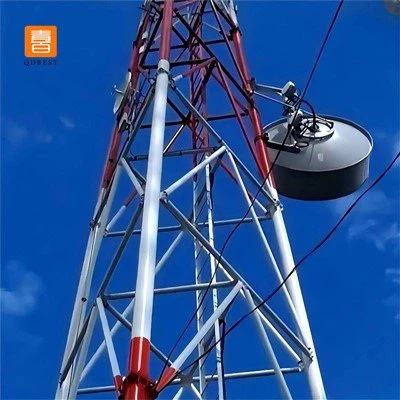
The Importance of Guy Wires in Tower Structures
Guy wires play a crucial role in the overall stability of a tower. Unlike self – supporting towers that rely on their own structure to resist wind, seismic, and other lateral loads, guyed wire towers use guy wires to transfer these forces to the ground. This design allows the tower to be more slender and cost – effective, as the guy wires help distribute the load over a larger area.
Additionally, guy wires reduce the bending moment on the tower shaft. By transmitting the lateral forces to the ground anchors, the tower experiences less stress, which in turn increases its lifespan and reliability. This is particularly important for tall towers, as they are more susceptible to high – wind loads.
Components Involved in the Guy Wire Attachment
Before we dive into the attachment process, it’s essential to understand the key components involved:
- Guy Wires: These are typically made of high – strength steel cables. The diameter and strength of the guy wires are carefully selected based on the tower’s height, location, and the expected load conditions.
- Tower Fittings: Specialized fittings are used to connect the guy wires to the tower. These include thimbles, which protect the wire from sharp edges and prevent abrasion, and clamps that secure the wire to the tower or other components.
- Ground Anchors: These are used to secure the guy wires to the ground. Ground anchors come in various types, such as deadman anchors, screw anchors, and driven anchors, each suitable for different soil conditions.
- Turnbuckles: Turnbuckles are adjustable devices that allow for the tensioning of the guy wires. They can be tightened or loosened to ensure the correct amount of tension is maintained in the wires.
Attachment Points on the Tower
Guy wires are attached to the tower at specific points, which are carefully determined during the tower’s design phase. These attachment points are typically located at intervals along the height of the tower. The number and location of the guy wires depend on factors such as the tower’s height, the type of loads it will experience, and the soil conditions at the site.
For shorter towers, two or three levels of guy wires may be sufficient. Taller towers may require four or more levels to provide adequate stability. The attachment points are usually reinforced with additional structural elements to ensure they can withstand the forces transmitted by the guy wires.
The Attachment Process
Step 1: Site Preparation
Before the tower is erected and the guy wires are attached, the site needs to be properly prepared. This includes clearing the area of any obstacles, leveling the ground, and installing the ground anchors. The ground anchors are installed at a specific distance from the tower base and at an appropriate angle. The installation process depends on the type of anchor used. For example, screw anchors are screwed into the ground, while driven anchors are hammered into place.
Step 2: Tower Erection
Once the site is prepared, the tower is erected. This is a complex process that requires careful planning and the use of specialized equipment. The tower sections are assembled on – site and gradually raised to their full height. During the erection process, temporary guy wires may be used to provide initial stability.
Step 3: Installation of Tower Fittings
After the tower is erected, the tower fittings are installed at the designated attachment points. The thimbles are inserted into the loops of the guy wires to protect the wires from damage. Clamps are then used to secure the thimbles and the guy wires to the tower. The clamps must be tightened to the manufacturer’s specifications to ensure a secure connection.
Step 4: Connection to Ground Anchors
The other end of the guy wires is connected to the ground anchors. This is usually done using a similar set of fittings, such as thimbles and clamps. A turnbuckle is installed in the middle of the guy wire to allow for tension adjustment. The turnbuckle is initially set to a loose position to allow for easy installation.
Step 5: Tensioning the Guy Wires
Once the guy wires are connected to both the tower and the ground anchors, they need to be tensioned. Tensioning is a critical step, as it ensures that the guy wires are able to provide the necessary support to the tower. A tensioning device, such as a dynamometer, is used to measure the tension in the guy wires. The turnbuckles are tightened gradually until the desired tension is achieved. The tension is usually specified in the tower design documents and is based on engineering calculations.
Step 6: Inspection and Adjustment
After the guy wires are tensioned, a thorough inspection is carried out. This includes checking the integrity of the connections, the tension in the guy wires, and the condition of the tower and the ground anchors. Any necessary adjustments are made to ensure that the tower is stable and that the guy wires are functioning as intended.
Quality Control and Safety
As a guyed wire tower supplier, we place a high emphasis on quality control and safety throughout the process of guy wire attachment. All components, including the guy wires, tower fittings, and ground anchors, are sourced from reputable manufacturers and are tested to meet strict quality standards.
During the installation process, our teams follow all safety regulations and best practices. Workers are provided with proper safety equipment and are trained in the correct installation procedures. Regular inspections are carried out to ensure that the tower remains safe and stable throughout its service life.
Maintenance of Guy Wires
Proper maintenance of guy wires is essential to ensure the long – term stability of the tower. This includes periodic inspections to check for signs of corrosion, wear, and damage. Any damaged components should be replaced immediately to prevent any potential safety hazards.
The tension in the guy wires should also be checked regularly. Over time, the tension may change due to factors such as soil settlement, temperature variations, and wind loads. Adjustments should be made as needed to maintain the correct tension.
Calling for Procurement

At our company, we are committed to providing high – quality guyed wire towers and reliable installation services. Our team of experts has extensive experience in the design, manufacture, and installation of guyed wire towers, ensuring that each project is completed to the highest standards.
Tubular Tower If you are in the market for a guyed wire tower, whether for a telecommunications project, a broadcasting station, or an electricity transmission line, we would love to discuss your requirements. We can provide you with customized solutions based on your specific needs and budget. Contact us to start the procurement process and ensure that your tower is installed safely and efficiently.
References
- "Structural Design of Guyed Towers" by American Society of Civil Engineers
- "Tower Engineering Handbook" by the Telecommunications Industry Association
- Manufacturer’s specifications for guy wire cables, fittings, and ground anchors
Qingdao BEST Steel Structure Co., Ltd.
Qingdao BEST Steel Structure Co., Ltd. is one of the most professional guyed wire tower manufacturers and suppliers in China. We warmly welcome you to buy customized guyed wire tower made in China here from our factory. If you have any enquiry about OEM service, please feel free to email us.
Address: Jiaobei Industrial Park, Qingdao, China
E-mail: sales@qdbsstower.com
WebSite: https://www.qdbsstower.com/
